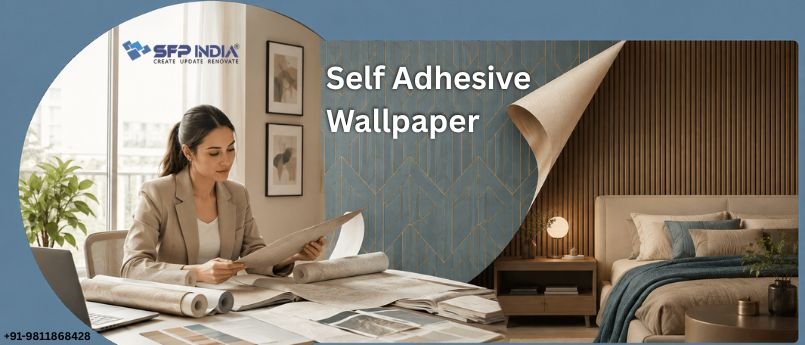
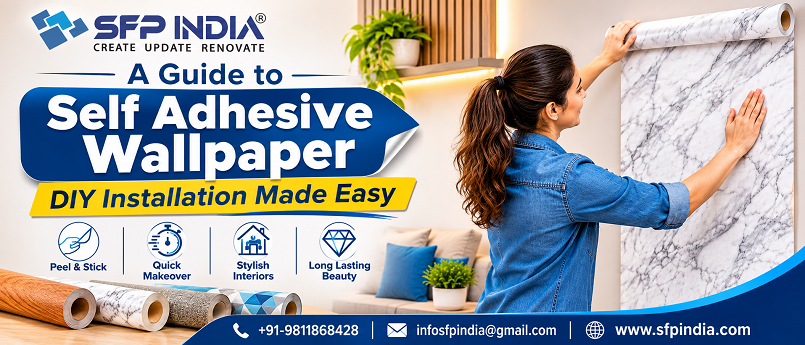
Giving your home or office a look does not always mean spending a lot on renovation, painting or tricky interior work. Sometimes just changing how a wall or surface looks can turn the space. Self‑adhesive wallpaper gives you a way to update interiors with pretty patterns, textures and finishes and you do not need traditional wallpaper glue.
If you want to create a bedroom refresh your living room decorate a home office or improve the look of a commercial space self‑adhesive wallpaper gives you flexibility in interior styling. Self‑adhesive wallpaper’s peel‑and‑stick feature makes it a practical choice for people who love DIY home improvement projects.
SFP India offers a variety of films and interior surface solutions from recognised brands such as D‑C‑FIX, ALKOR, Samsung SOIF and other architectural film collections. These solutions give finishes and applications, for both residential and commercial interiors.
In this guide we will explain what self‑adhesive wallpaper is, its benefits, how to pick the design and how to install it at home.
What Is Self-Adhesive Wallpaper?
Self-adhesive wallpaper is a kind of wall covering that has glue on the back. It has a paper that covers the glue. This paper is taken off when you put the wallpaper on the wall. Then the wallpaper sticks to the wall easily.
This type of wallpaper is not, like fashioned wallpaper. Fashioned wallpaper needs its own glue or paste, Self-adhesive wallpaper is easier to put up.
It comes in colors, textures, designs and looks. It fits with different ways of decorating inside a house.
Some popular designs include:
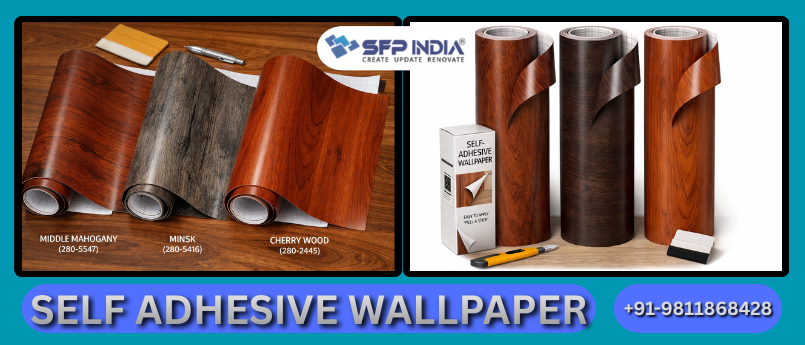
- Wooden textures.
- Marble and stone patterns.
- Floral prints.
- Geometric designs.
- Plain and solid colours.
- Modern decorative patterns.
- Concrete and metallic finishes.
Depending on the product specifications, certain self-adhesive films can also be used on furniture, cabinets, doors, glass, and other compatible surfaces.
Why Choose Self-Adhesive Wallpaper for Your Interiors?
Self-adhesive wallpaper has become a practical choice for homeowners, interior designers, and businesses looking for convenient decorative solutions.
Here are some important benefits.
Easy DIY Installation
One of the biggest advantages is its peel-and-stick application. The adhesive is already incorporated into the product, so separate wallpaper glue is generally unnecessary.
With proper surface preparation, measuring, and alignment, smaller projects can often be completed without professional assistance.
Quick Interior Makeover
Changing the appearance of a room with traditional renovation methods can take time. Self-adhesive wallpaper provides another option for refreshing selected walls and surfaces without extensive construction work.
Wide Range of Designs
From natural wood textures to elegant marble patterns, decorative wallpaper offers multiple choices for different interior themes.
You can select a design that complements your furniture, flooring, lighting, and existing décor.
Convenient Maintenance
Some decorative films have wipeable or moisture-resistant surfaces. Depending on the product, everyday dust and light marks can be cleaned with a soft cloth.
Always follow the manufacturer's cleaning recommendations.
Flexible Interior Styling
Self-adhesive wallpaper can be useful when you want to introduce a new colour, texture, or decorative effect without changing the entire interior.
Certain products are designed to be removable, although removal results depend on the adhesive, wall paint, surface condition, and installation period.
Where Can You Use Self-Adhesive Wallpaper?
Self-adhesive wallpaper and decorative films can be used in different residential and commercial environments, provided the selected product is suitable for the application surface.
Living Room
Create a stylish feature wall behind the television, sofa, or entertainment unit. Wood, marble, and geometric finishes can add character to modern living spaces.
Bedroom
Use subtle patterns, soft colours, or natural textures to create a comfortable atmosphere. A decorative wall behind the bed can become the main visual feature of the room.
Kitchen
Selected decorative films can be used on suitable cabinets and other compatible surfaces to refresh the kitchen's appearance. Check the product's heat and moisture limitations before applying it near cooking areas or sinks.
Home Office
Give your workspace a more professional appearance with simple textures, neutral colours, or modern decorative patterns.
Retail Stores
Retail businesses can use decorative films to improve display areas, counters, shelving, and selected interior surfaces.
Offices and Commercial Spaces
Reception areas, meeting rooms, workstations, and other interiors can benefit from decorative surface treatments that complement the company's visual identity.
How to Choose the Right Self-Adhesive Wallpaper
Selecting the right wallpaper involves more than choosing an attractive design. You should also consider the material, surface condition, application area, and maintenance requirements.
Consider the Material
Check the material and construction of the wallpaper before purchasing. PVC-based decorative films are available in different finishes and are commonly used for interior surface applications.
Compare the product specifications to understand its intended use.
Select the Right Design
Choose a pattern that matches your interior theme.
For example:
- Wood textures work well with natural and warm interiors.
- Marble patterns complement elegant and contemporary spaces.
- Geometric prints suit modern decorative themes.
- Solid colours provide a simple and minimal appearance.
- Metallic finishes can create distinctive accent surfaces.
Check Surface Compatibility
The surface should be clean, dry, smooth, and suitable for the selected adhesive film.
Rough, damp, dusty, peeling, or damaged surfaces can affect adhesion and the final appearance.
Review Maintenance Requirements
Check whether the product can be wiped clean and which cleaning materials are recommended. Do not assume every wallpaper has the same water, heat, or scratch resistance.
Measure the Installation Area
Measure the wall or surface carefully before ordering. Consider the roll width, pattern repeat, alignment requirements, and additional material needed for trimming.
DIY Installation: How to Apply Self-Adhesive Wallpaper at Home
One of the main reasons people choose peel-and-stick wallpaper is its relatively straightforward installation process.
Follow these steps for a neat finish.
Step 1: Prepare the Surface
Clean the wall or selected surface to remove dust, grease, dirt, and loose particles.
Make sure the surface meets the manufacturer's installation requirements. Damp walls, peeling paint, and uneven textures should be addressed before application.
Step 2: Measure the Area
Use a measuring tape to calculate the height and width of the installation area.
Mark the required dimensions and allow extra material for trimming. If the design contains repeating patterns, account for pattern matching.
Step 3: Cut the Wallpaper
Place the wallpaper on a clean, flat surface and cut it according to the measurements.
Use a sharp cutting tool and a suitable straight edge for clean cuts.
Step 4: Position the First Section
Before removing the backing paper, position the first section against the wall.
Use a level or plumb line to ensure that the wallpaper starts straight. A correctly aligned first panel makes the remaining installation easier.
Step 5: Peel the Backing Paper
Remove a small portion of the protective backing from the top edge.
Avoid removing the entire backing at once, as gradual application provides better control.
Step 6: Apply and Smooth
Press the exposed adhesive section onto the surface.
Slowly continue removing the backing while smoothing the wallpaper with a suitable applicator or plastic smoothing tool. Work from the centre towards the edges to reduce trapped air.
Step 7: Match the Patterns
When installing multiple panels, carefully align the design at each joint.
Take extra care with wood grains, geometric prints, and repeating decorative patterns.
Step 8: Trim the Excess Material
Once the wallpaper is properly positioned, trim the extra material around corners, edges, and other boundaries.
Check the complete surface for alignment, creases, and air bubbles.
DIY Tip: For your first project, consider starting with a small, simple wall section. It helps you understand the material, adhesive behaviour, and application technique before working on a larger area.
Common DIY Installation Mistakes to Avoid
Even though self-adhesive wallpaper is designed for convenient application, improper installation can affect the final result.
Avoid these common mistakes:
Applying Wallpaper on a Dirty Surface: Dust and grease can prevent the adhesive from making proper contact.
Ignoring Wall Condition: Uneven, damp, or peeling surfaces can lead to adhesion problems.
Removing the Entire Backing at Once: This can make the wallpaper difficult to control and align.
Incorrect Measurements: Poor measurements can lead to material wastage and visible gaps.
Ignoring Pattern Alignment: Decorative patterns may look uneven if adjoining sections are not properly matched.
Using the Wrong Cleaning Products: Harsh chemicals and abrasive tools can damage certain decorative finishes.
Skipping Product Instructions: Different materials have different application requirements. Always check the manufacturer's installation guide.
Self-Adhesive Wallpaper vs Traditional Wallpaper
Both options can improve the appearance of interior spaces, but they differ in their installation methods and practical requirements.
|
|
|
|
|
|
|
|
|
|
|
|
|
|
|
|
|
|
|
|
|
|
|
|
|
|
|
|
The right option depends on the project, product quality, surface condition, and desired finish.
Popular Self-Adhesive Wallpaper Designs for Modern Interiors
The right design can influence the overall appearance and atmosphere of a room.
Here are some popular design categories to consider.
Wood Finish
Wood textures create a natural and warm appearance. They can complement contemporary, rustic, and traditional interior styles.
Marble Finish
Marble-inspired designs offer a sophisticated appearance for selected walls, cabinets, and furniture surfaces.
Geometric Patterns
Geometric designs are suitable for modern interiors where you want to introduce visual interest through shapes and patterns.
Solid Colours
Plain finishes provide a clean appearance and work well with minimalist interior themes.
Decorative Glass Films
For glass partitions, doors, and selected windows, decorative glass films can offer privacy and visual styling without replacing the glass.
SFP India's product collections include multiple decorative surface categories, allowing customers to compare finishes according to their interior requirements.
When Should You Choose Professional Installation?
DIY installation can be suitable for smaller and relatively simple projects. However, professional installation may be preferable in certain situations.
Consider professional assistance when:
- You are covering large wall areas.
- The design requires precise pattern alignment.
- You are working with premium architectural films.
- The surface has corners, curves, or complicated edges.
- The installation involves glass, furniture, or specialised interior finishes.
- You require a consistent finish across multiple rooms or commercial spaces.
Professional installers can help with surface preparation, material handling, alignment, and finishing.
For larger interior projects, choosing the correct product and installation method together can help achieve better results.
Why Choose SFP India for Self-Adhesive Wallpaper Solutions?
I think choosing the supplier is important when you want decorative materials that fit your design taste and project needs.
SFP India supplies architectural films, decorative surface materials and interior film solutions for home and office projects.
Its product range features collections from brands such as:
- DC-FIX.
- ALKOR.
- Samsung SOIF.
- Hyundai BODAQ.
- SOLYX.
- 3M Architectural Finishes.
- INFEEL.
I find customers can look at decorative finishes, such, as wood, marble, solid colours, glass films and other architectural surface choices.
Product Variety
SFP India provides access to multiple brands and decorative surface collections, making it easier to compare designs and finishes.
Residential and Commercial Applications
Its product range supports different interior applications across homes, offices, retail spaces, and other commercial environments.
Product Guidance
Customers can enquire about suitable materials, finishes, and application requirements before selecting a product.
Product Catalogues and Samples
SFP India provides product catalogues and information to help customers evaluate available collections. Physical samples and shade cards can also be requested through the company's team.
Tips for Maintaining Self-Adhesive Wallpaper
Proper maintenance helps preserve the appearance of decorative surfaces.
Follow these simple practices:
- Clean the surface using a soft cloth.
- Avoid abrasive scrubbers.
- Use only cleaning products recommended by the manufacturer.
- Do not expose the wallpaper to excessive heat unless the product is rated for it.
- Avoid prolonged water exposure on products not designed for wet conditions.
- Check edges and joints periodically.
- Follow the recommended removal procedure if you want to change the design.
Maintenance requirements can vary according to the material, finish, and application environment.
Conclusion
Self‑adhesive wallpaper offers a way to refresh interior spaces without complicated traditional wallpaper installation. Self‑adhesive wallpaper comes in colours, patterns, textures and finishes. Homeowners, designers and businesses can use Self‑adhesive wallpaper to create interiors, with chosen decorative surfaces.
A neat result needs the product. The surface must be prepared correctly. Measurements must be accurate. The installation process must be followed as recommended.
SFP India supplies a range of decorative films and architectural surface solutions from recognised brands. SFP India helps customers find finishes that fit interior needs.
If you plan a DIY makeover or need decorative surface materials for a larger project explore SFP India product collections. Choose a finish that complements your space.